
Camp: Analog’s Last Frontier?
It’s early June 2025 and we’re knee deep in the usual pre-camp rush. Staff pickups at the airport. Finishing touches on new cabin bathrooms. Ordering art supplies and a few dozen basketballs. Pouring over camper forms.
One bullet point on the to-do list? The OD (“On Duty”) Chart. The calendar of counselor assignments for who is in charge of each division from the end of Evening Activity through counselor curfew. Seemingly straightforward enough, but it’s a tedious task. Assistant Head Counselors Jane and Quinn and Head Counselors Kerri and Mark have taken on the lion’s share.
Mark enlists the help of Google Gemini. This is what AI is made for, right? He puts in the general parameters: first names of counselor staff; the dates we need OD; number of OD assignments on each of those nights. Gemini spits out a calendar… but Mark looks it over and it isn’t quite right. Junior Counselors can’t have OD on their van nights. He adds the parameter. Hmmm. Still imperfect. We want more equitable distribution of newer and more senior counselors. We want each counselor to have the same total number of ODs, but not on back-to-back nights. We want…..
Finally Gemini responds: “Due to the complexity of re-balancing the entire schedule while strictly adhering to this constraint and other rules, it will take some time to recalculate.” Gemini spins and spins and spits out… nothing. As Mark texted: “The OD Chart broke Gemini.” Or, more accurately, the nuanced camp brain and eye was not yet something that AI could replicate.
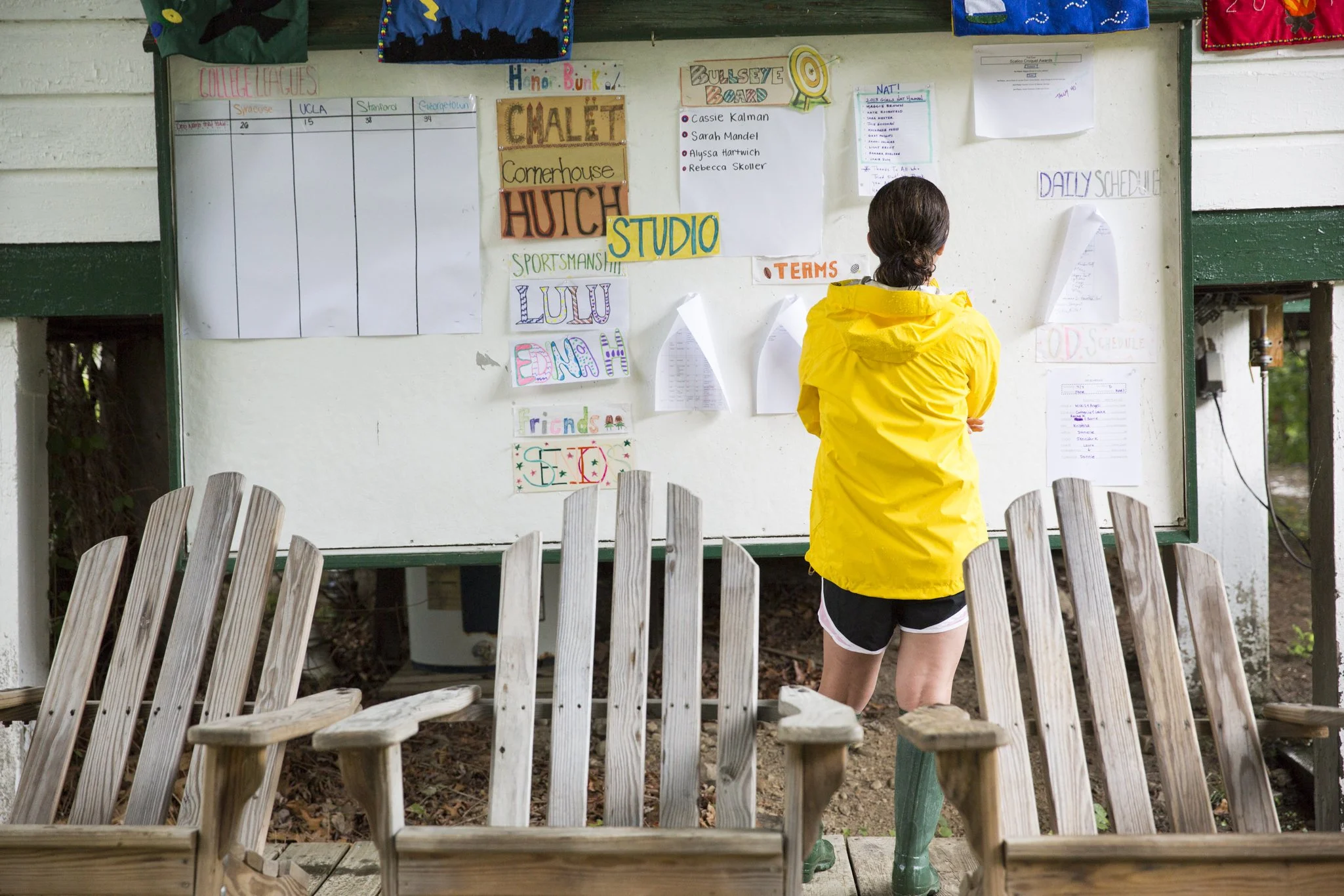
Camp… a land of checking the physical schedule.

Last month, Audrey and I attended a conference on Camp and AI. While camping and tech hardly go hand-in-hand (in fact, we spend a lot of effort ensuring that they don’t), there are of course operational sides of the business that could benefit from AI’s innovation. From processing camper bus sign ups and identifying the most equitably convenient pickup location; to streamlining Suncup and Chocolate Milk inventory and ordering… I can think of plenty of tasks we’d be happy to AI outsource.
And yet… I also can’t stop thinking about how back in the 1990s, my dad knew every camper’s zip code (if not entire address) by heart. Back then, we still sent all camp paperwork (not just the newsletter) through snail mail. And so, entire spring evenings would be dedicated to adhering printed address labels to envelopes… usually on our living room couch, with a Yankee game on in the background.
The zip code knowledge was something of a party trick. At camp raffles, or games when dad had to pick a camper by name, the intro would go something like:… she’s a 10580… 11 Eve Lane… Kerri Winderman! He could do this for an astonishingly large percentage of camp.
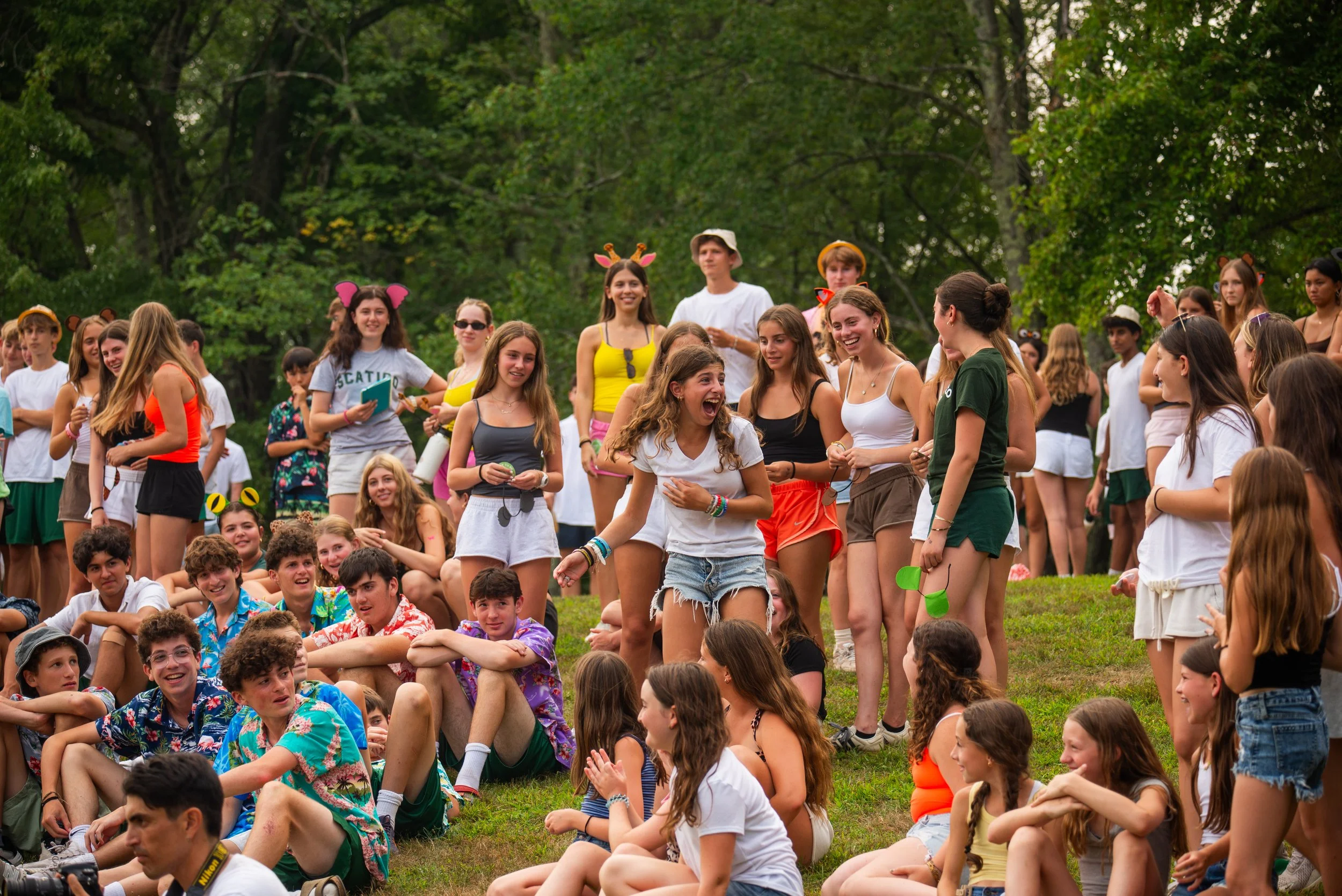
And the winner is… 10506…Lila Savitsky! The rush of winning at a full-camp event (this one Carnival’s “horse race.”)
The more I think about it, the more I realize it’s more than a party trick. It’s a human connection. A human brain. It’s connecting dots in real time, and getting to know our community on a deeper level. Precisely because there was this pretty tedious task, and we didn’t tech shortcut it. And while I may score pretty high on camper hometowns, without that physical mail labeling, I definitely don’t know full addresses. Something gets lost when we’re not in the analog, administrative weeds. And while in this example, the mailing efficiency pros clearly outweigh the zip code knowledge cons… the cons are always worth considering.
We’re prone to reflecting on the power of camp, and how fundamentally essential in-person, radically unplugged, connection and play is for kids. It feels more essential by the day. For every article celebrating advances in AI, another warns of its dangers. “How AI is rewiring childhood,” was the latest headline to catch my eye. The article shares two AI pitfalls that are particularly relevant to camp:
“The technology quickly learns what its master likes—and shows more of it… The child who likes football may be told football stories by his teddy and given footballing examples by his ai tutor. Not only does this stamp out serendipity. A favourites-only diet means a child need never learn to tolerate something unfamiliar.”
“One-sided relationships with chatbots… ai companions that never criticise, nor share feelings of their own, are a poor preparation for dealing with imperfect humans…Yes-bots threaten to create children not used to taking turns, who grow up into colleagues unable to compromise…”
Camps (and schools) are natural spaces to address these pitfalls. To lean into all the “humanness” that robots can’t teach. From being “bed buddies” with a kid who has different interests than your own; to trying out an activity you rolled your eyes at the week before; to getting in a real disagreement on the Gaga court, stewing at Crafts, but working through it at General Swim; to going to a counselor for advice, one who will draw from their own experiences growing up, and challenge you to take another’s perspective.
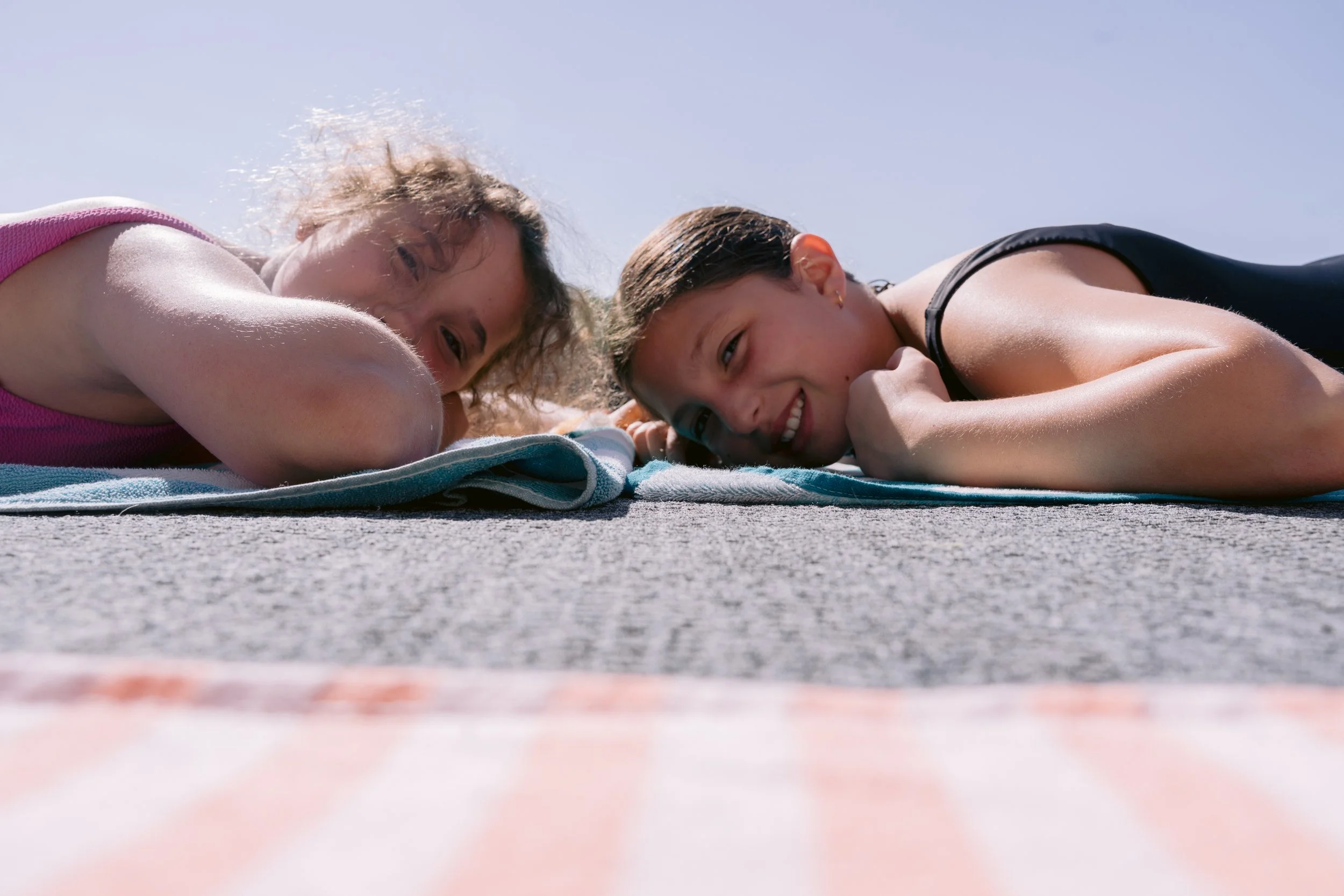
The art of face-to-face, or side-by-side.
Now… I don’t think we’re going back to all snail mail camper forms. And maybe in a few months Gemini can get us going on that first draft of an OD Calendar (before Jane and Mark go in with their exacting eyes). There are obvious advantages and logistical realities at play, and Scatico has no interest in being frustratingly outdated or inaccessible. Not to mention, administrative time saved is more time spent on “the good stuff”: face-to-face time with campers and staff; proactive problem solving; cultivating community, spirit and tradition. Dedication to our mission. But we strive to be intentional in how and where tech is used. When we are trying to solve for a world in which kids are becoming friends with robots, we cannot lean on one to run our operations.
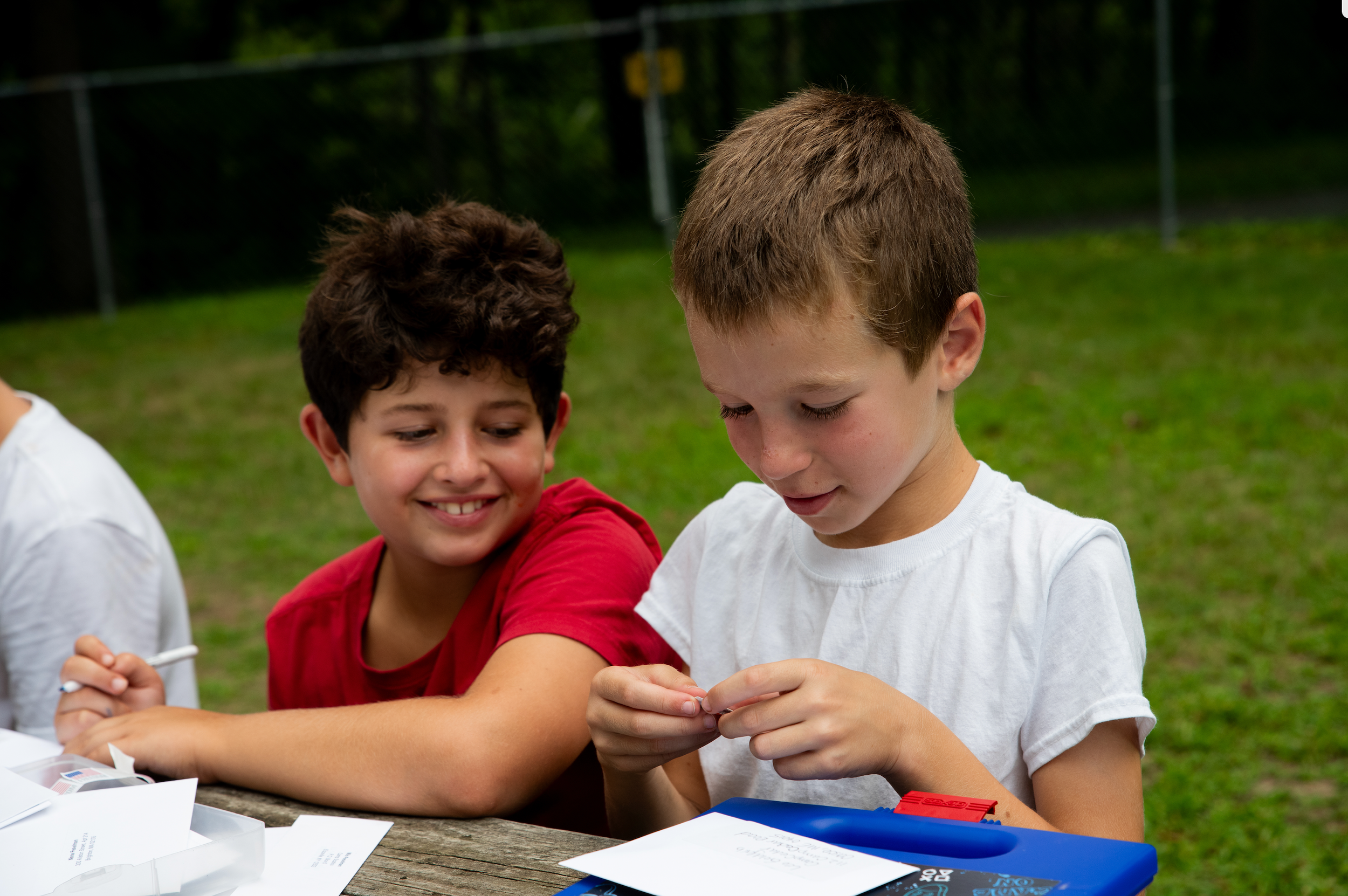
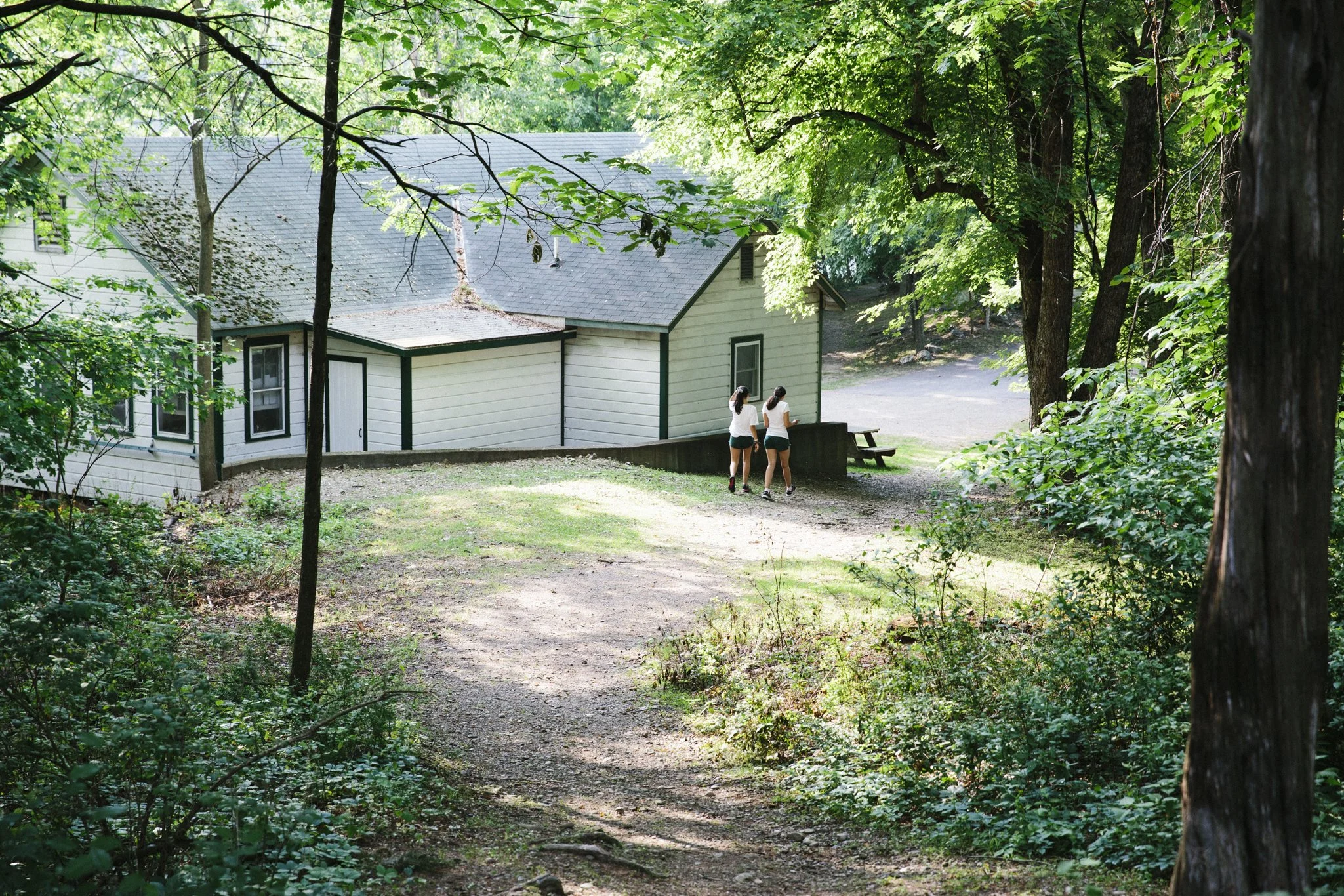
Pen on paper and card games… Analog connection at camp.
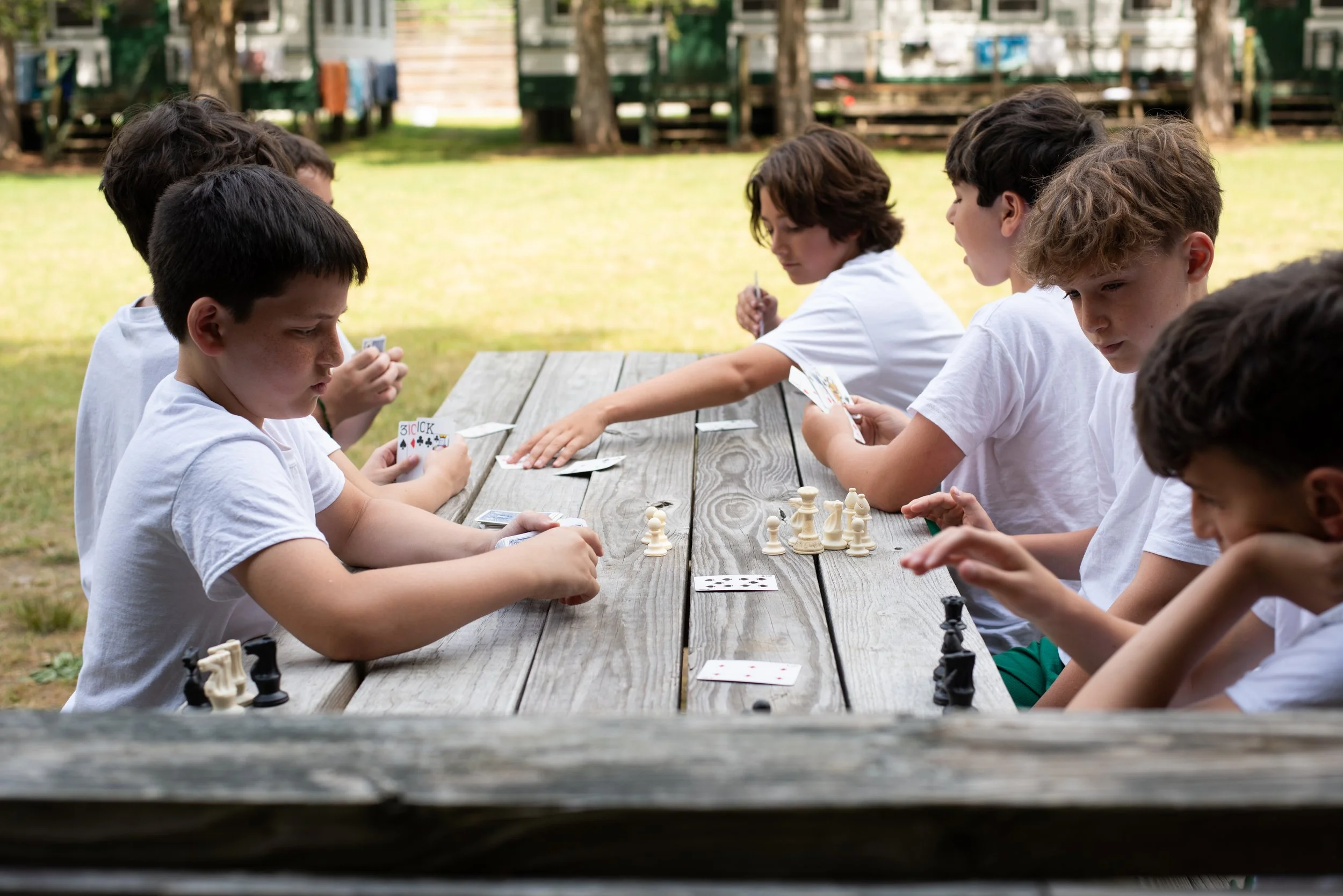
It feels liberating to say that faster and newer isn’t always better, and we’re lucky to operate a space and second home where kids and adults can escape AI’s relenting pull. Ken Vallario (back this year for a full summer!), once told me that he loves camp’s “inefficiency.” He was talking about all the ways you don’t take the shortest route from A to B at camp: whether it’s walking from the HC to the office, but getting derailed over the rave launch competition at the lake; or campers huddling around a radio at bedtime, catching the end of a baseball game when they don’t know what “FM” is; or heads bowing in concentration (and laughter) over Color War emblems carefully glued and sparkled by hand, when there’s probably a Cricut setting for that.
At Scatico, we have the luxury of simplicity and connection as the priority over efficiency and expediency. An essential power of camp that is… timeless.